
Where Landscape & Legend Collide with Culture & History
The Northern Highlands are raw and brutal. They’re also beguiling beautiful.
The traffic is light, and the roads open up to you.
With a base in or around Inverness you can add some serious value to your golf
Culloden
If you ‘get’ Culloden, you’ll go a long way towards ‘getting’ Scotland, for ‘upon this field was Scotland lost’, in 1746 with the final defeat of the Jacobite uprising and the escape into exile of the ‘young pretender’, ‘Bonnie’ Prince Charlie.
The battlefield itself is small and easily walked on a series of trails. The order of battle is well known, well-marked out, and very easy to relate to. You will be able to stand in the same positions that the armies stood in all those centuries ago. You don’t require an enhanced strategic appreciation of military tactics to understand Culloden. In many respects the story around the uprising and what it meant is more compelling than the battle itself. In certain light conditions Culloden is a genuinely spooky and emotive place. The ghosts of history hang heavy on it, and its a firm recommendation
Loch Ness
Sadly the evidence against a Plesiosaur lurking in the depths of Loch Ness is becoming quite compelling, but there is still a mystery as to what it is that is frequently seen in the Loch? For years the strongest evidence rested with the so-called surgeons photograph. This became the iconic face of ‘Nessie’. It was only from beyond the grave however that the hoaxer owned up to his deception. The Loch can still provide the visitor with a good return provided we aren’t seduced into setting siege to it from a lay-by on the A82 with a pair of binoculars, thermos flask, and supply of inadequate sandwiches. The answer is to get out on the water and cruise.
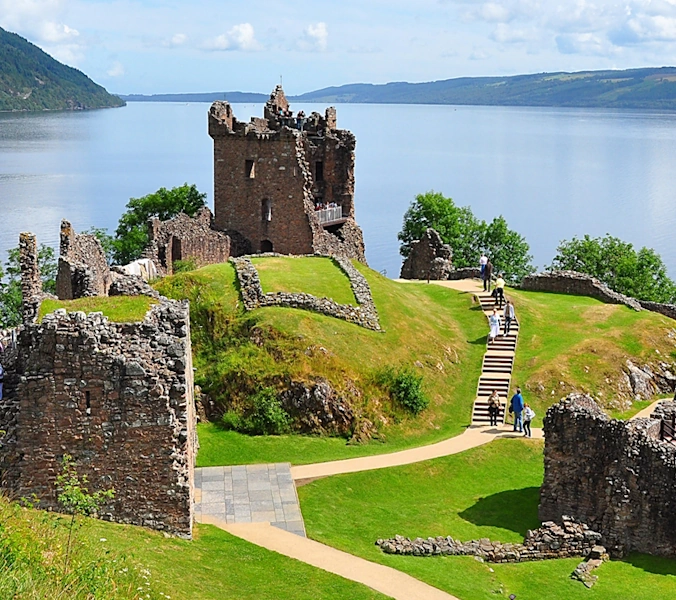
Urquhart Castle
Towards the northern end of the Loch is Urquhart Castle. The present ruins date from the 13th to the 16th centuries, albeit there is evidence of a wooden fort dating to the 6th century. Urquhart played a role in the Wars of Scottish Independence in the 14th century and was subsequently held as a royalist castle. It was raided on several occasions by the MacDonald’s of Ross. The castle was granted to the Clan Grant in 1509. Despite a series of further raids the castle was strengthened, only to be largely abandoned by the middle of the 17th century. Urquhart was partially destroyed in 1692 to prevent its use by Jacobite forces, and subsequently decayed.
Dunrobin Castle
There is one castle in Scotland that looks completely out of place, and that is Dunrobin. Indeed, were you to present a photograph of Dunrobin to an informed traveller and ask them to nominate where in the world they thought it was, most would be confident in answering “France”. Some might even be so sharp as to hone in on the “Loire Valley”. They’d be wrong. Dunrobin Castle overlooks the Moray Firth, just north of the villages of Golspie and Dornoch and is the most northerly of Scotland’s great houses, the largest in the Northern Highlands with 189 rooms.
Dunrobin hasn’t quite got the bloody history of most Scottish castles, but it isn’t without it’s colour either albeit its tended to be restricted to family feuds and plotting in attempts to take ownership of the estate rather than internecine clan warfare
Glen Coe
Combining both Glenfinnan and Glencoe with a round of golf is pushing things a bit, but it is possible.
Glenfinnan sits at the head of Loch Shiel. It was here in 1745 that ‘Bonnie Prince Charlie’ came ashore to begin his campaign to seize the British crown which ended in defeat at Culloden. Today Glenfinnan is probably more famous for the curved railway viaduct that spans the head of the glen and features in the Harry Potter films!
Glencoe is the scene of the infamous massacre of the MacDonald’s in 1692, and one of the most notorious place names in Scottish history. The glen is a steep sided glaciated valley with mountains that tower threateningly above you. Like Culloden, a heavy atmosphere hangs over the ‘glen of weeping’ and the light can play bewitching tricks on your senses. Spooky!
Speyside
If we’re based in Inverness and have a fondness for whisky then we really ought to set something aside for exploring at least a couple of the ‘famous names’ of Speyside. No where in Scotland has more working distilleries than Speyside and the list is indeed impressive. Speyside is about an hour from Inverness. A standard tour and tasting lasts about 75 minutes.
Here we’ll find the likes of Macallan, Glenlivet, and Glenfiddich. In addition there are other names such as Glenfarcas, Strathisla (Chivas), Glen Grant, Aberlour and Balvenie, as well as a host of smaller perhaps less well known distilleries
Contexts'
The Highlands of Scotland needn’t have a particularly strong retail offer. The biggest city is Inverness, and whereas that’ll look after most of our needs, it’s not going to add too much more. Instead the stronger offer probably lies in the A9 corridor and the places we’ll drive through in order to get here
Pitlochry is a gateway town and has a number of craft shops as well as woollen wear
The House of Bruar is just to the north Pitlochry and is factory retail outlet village that sells some of the very best gear with specialist niches in foodstuffs, outdoor clothing, and traditional woollen wear
The food in the highlands is much more traditional than that which we’ll find in the central belt where cosmopolitan influences have created a much more diverse choice. If that sounds limiting however, it needn’t be
Words like ‘traditional’ and ‘highlands’ means thinks like Salmon, Venison and other game. The highlands of Scotland have some vast game estates and if we’re discerning we can certainly find quality
If we’re looking for activities, then about 30 mins south of Inverness is the town Aviemore, which has had to re-invent itself as a family outdoors activity centre of water sports, trail bikes, zip wires through forest, quad bikes, canoes, sailboats, climbing (just about everything really) it even has an imported beach on the shores of Loch Morlich which is surrounded by a pine forest (its idyllic). We said re-invent itself for a reason though, (and its faintly comic).
In the 1970’s Scotland decided to enter the international ski resort market, and Aviemore’s star briefly burned brightly as it became something of a trendy place to visit. There was a problem though
A ski resort without reliable snowfall might possess a flaw in the business model. And so it proved. Although it still exists as a ski resort today, the ambition and season is much scaled back, and the town has had to diversify
We’re probably pushing the boundaries a little bit by seeking to stretch as far south as Glen Coe, but the destination we get asked about most is the Isle of Skye.
At the height of summer, it’s feasible to day trip Skye from Dornoch or Inverness, but it’s probably not something we usually encourage. It’s about 3 hrs to get there, and 3 hrs back, and even when we are there, to get around it we probably have to spend another 2-3 hours in a vehicle touring
If we really wanted to ‘do it’ though, then yes it’s possible, but we’ll probably find some of the destinations in the A9 corridor around Perthshire and Pitlochry a whole lot more manageable
Testimonial
From BB Canada
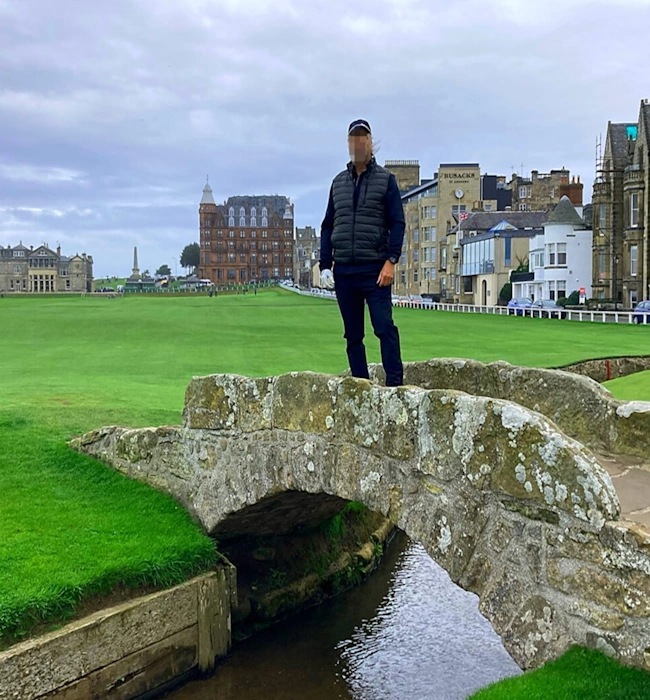
“I told Alun the courses I was interested in playing and he prepared a stay and play package with 14 days of outstanding golf, but also tremendous site seeing opportunities for my wife.”

From JC Illinois
“His attention to detail is amazing--I think our travel plan booklet ran to forty-eight pages, with gorgeous descriptions of cities and sights, plus maps showing where to go to catch trains, or walk from trains to hotels, sights and golf courses, etc.”
From DF Alabama
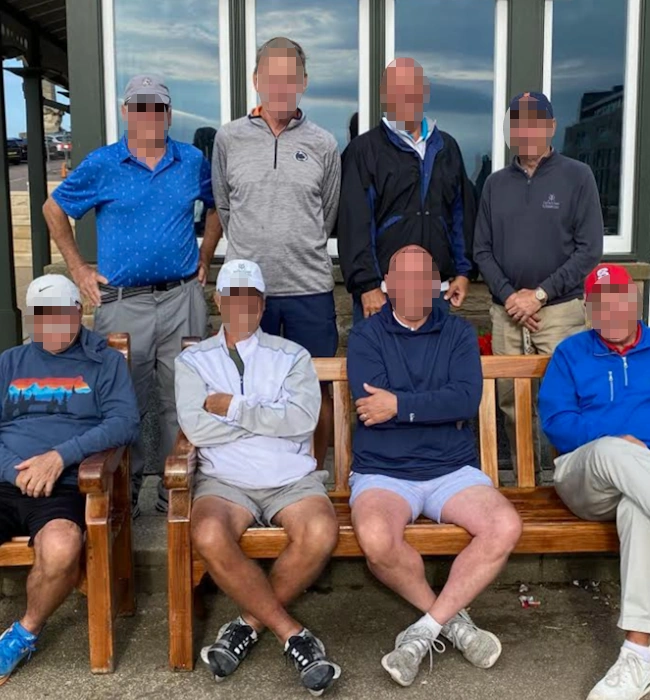
“I will cherish the memories for a long time- especially the wonderful times spent on and off the golf course with two of my brothers and brother-in-law. None of the memories and golf would have been possible or enjoyed without your tremendous planning and logistical support.”

AS from Colorado
“Alun and Faraway Fairways created possibly the most memorable golf trip we have ever experienced. EPIC is the only word that comes to mind.”
AC, From Florida/ New York, 2025
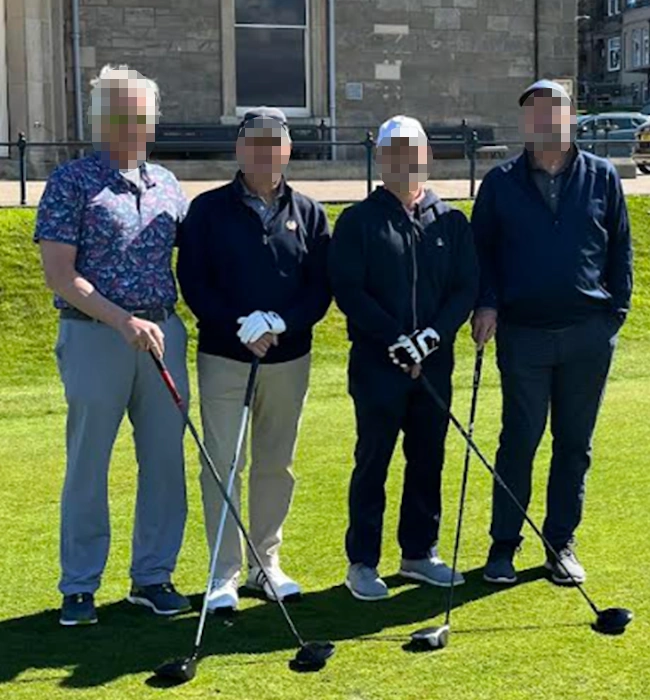
“We were hopeful to secure a 4 ball at St. Andrews while avoiding the massive expense other operators had quoted. He was very clear about the plan for achieving a tee time at the Old Course through the ballot, including detailed instruction on how it could be done, and what our odds were. He suggested mid- to late April as the best chance of success and advised that this is also the least rainy part of the year. We took his advice and trusted the process. Well, he was right on all counts!”
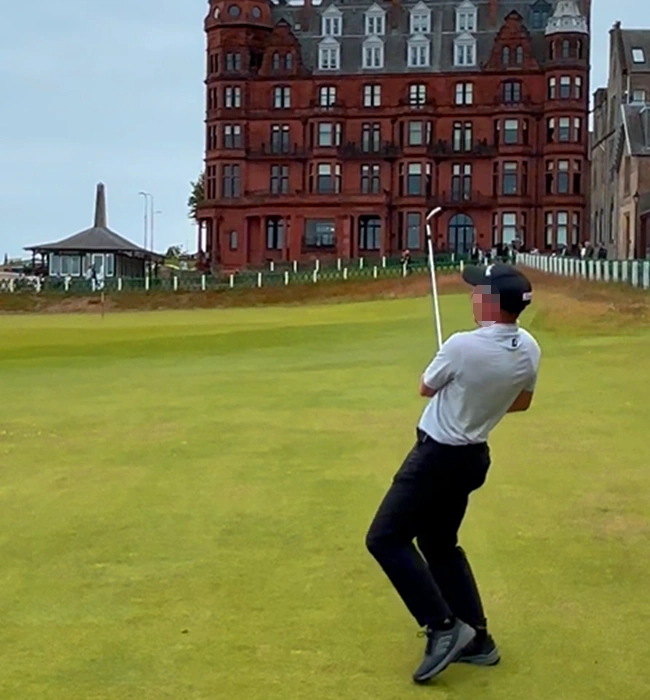
From SB, Minnesota
“We wholeheartedly recommend Alun and Faraway Fairways if you’re looking for a golf trip that is effortless, enjoyable, and truly unforgettable—even for a non-golfer in the mix! My husband and I will be daydreaming about this trip for years to come. 5.5 stars!”

From JB, California
“The best part was that the service was surprisingly affordable. They were thousands of dollars below other quotes that I received, in fact the prices were very similar to what I would have paid if I would have booked everything on my own.”
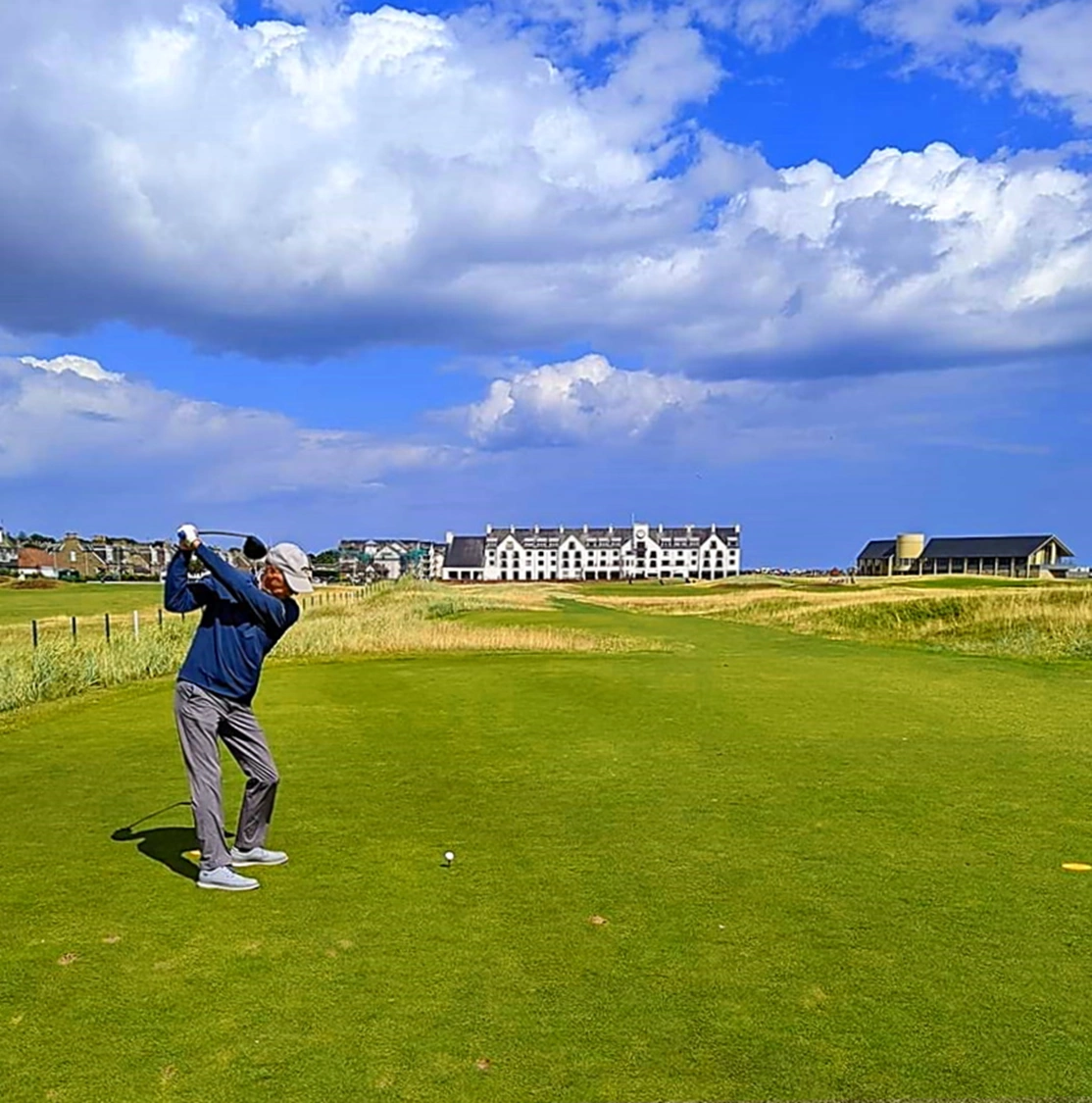
From JCA, Maryland
“I would and will highly recommend your company to anyone looking to plan an unforgettable golf trip. Thank You for putting together a fantastic trip for J.C. and me”
From WF Connecticut
“I think all eight of us would agree that Alun at Faraway Fairways did an absolutely wonderful job of putting this “golf vacation of a lifetime” together for us. His focus on the details was extraordinary from the choice of courses and the timing of the tee times, the amazingly beautiful accommodations along with some excellent meal selections, and the transportation options he provided to get us from place to place.”
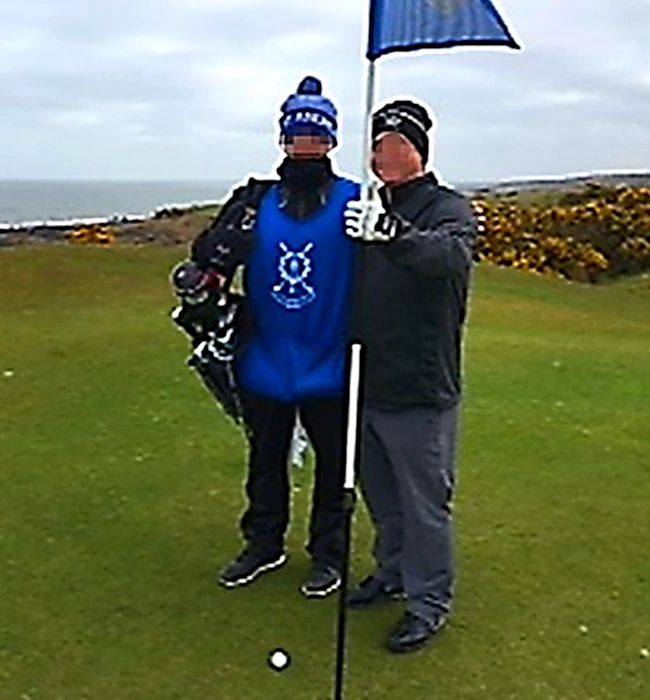
From DR South Carolina
“You are about to tee it up in your Major. Seek wisdom, integrity and professionalism. Alun Davies and Faraway Fairways will not disappoint you. They cannot assure a calm sunny day with temperatures in the 70’s on the Old Course.”

From MM, California
“One fantastic trip you organized, and more importantly took ownership of in terms of daily communication and stewardship during our 2+ weeks in Scotland and Ireland. The logistics were spotless…100% of the transports were on time and excellent, the lodging choices spectacular and the golf was off the charts in terms of quality and arrangements made”
DH from California
“You cannot go wrong with the support Faraway Fairways offered. I did this trip solo and all last minute but I have already begun to plan the next trip which will include my best golfing buddies.”
Enquiry
We don't need to make this an ordeal by 101 filtering questions! In reality there are probably little more than half a dozen things we need to know to build out a proposal. The guidance below might help you frame answers
Duration - usually best expressed as a range up to a maximum
Time of year - can be anything from a specific date range to a named season
Travel class - Faraway Fairways uses 'Luxury', 'Premier' or 'Affordable' for generic purposes. You might choose to reference the international 'star' rating system. We're only looking for something to help steer us into the right sector
Self drive or hired driver - In broad terms, self driving is normally less expensive, and much more flexible, but some folk just don't want to do it
Must play courses/ must do places - a few name checks is all that's needed