

Famous Holes
Roads, Railways, Redans and Stamps all feature amongst Scotland’s most famous and iconic golf holes. If we’re talking bucket list courses, then yes, we can also extend the same accolade to specific holes too
To take a closer look at some of the more famous, CLICK, the button below

To view The St Andrews Road Hole, arrow right or swipe left >>>>>>>>
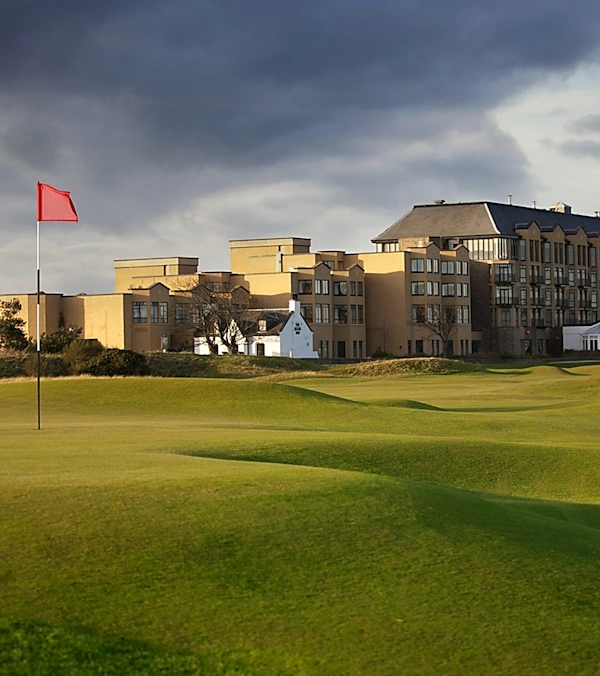
The Anatomy of 'the Road Hole'
If we were drawing up candidates for the most famous hole in golf, then the 17th on the St Andrews Old Course would be in the conversation. ‘The Road Hole’ is frequently in the top three searches every month on the Faraway Fairways website, so it clearly captures people’s imagination (even if it’s not a packaged tour!)
If you tell someone that you’ve played the Old Course one of the first questions they ask is what score did you post? and if they don’t, the other question they ask is what you took at the Road Hole
For a closer look at the Road Hole, CLICK, the button below
For further help in choosing, view the World Course Rankings, arrow right or swipe left >>>>>>>>

World Rankings
World ranking lists have long ago expanded beyond Golf Magazine and Golf Digest, and it frankly becomes difficult to keep up with them now. It reminds us a little bit of the various world boxing belts! Any Golf Tour Operator has to be mindful of their impact however as there can be little doubt that they help frame people’s ambitions
Faraway Fairways have tried to pull together 4 or 5 of the more established lists and average them out to draw up a list of sorts. We shouldn’t perhaps get too concerned though. We can safely assume that anything which features is pretty good!
To view the list we’ve compiled (as of 2025) CLICK, the button below
To see our nomination for the best golf itinerary possible, arrow right or swipe left >>>>>>>>

What's the Best Possible Vacation?
There are many components that might come together in building the ‘best possible’ golf vacation, but we can safely say that with the concentration of world-class courses that exist in Scotland and Ireland, this particular part of the planet is one of just two global ‘hotspots’ which claim to be the ‘best in the world’
Even so, ‘best’ is subjective, and needn’t be as straightforward as lining up a world ranking list anyway. Things like mileage, non-golf added value, and accommodation can all feed into the answer, as indeed would limiting factors such as duration. If you were to pin us down for one answer however, then we wouldn’t be far away with the offer below. ‘CLICK’ to view
To view our nominations for Scotland’s best Par 3’s, arrow right or swipe left >>>>>>>>
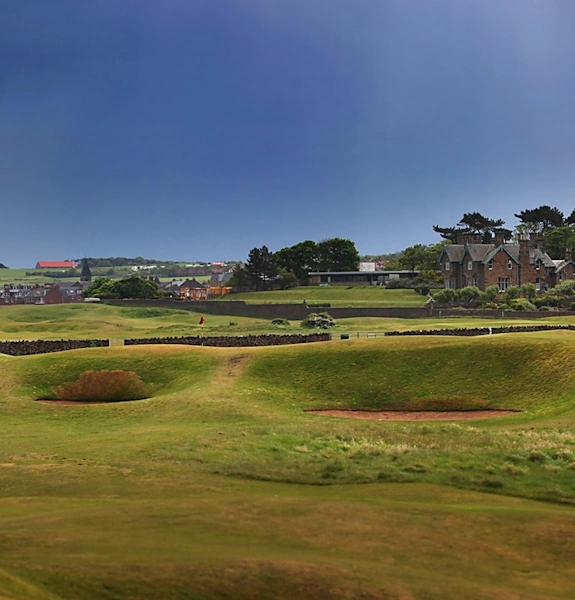
Scotland's Best Par 3's
Building the best golf course is something of a golf writers past time (more of which later as we couldn’t resist trying our own hand at it), but before we reveal our choices, we thought we’d try and build 18 holes composed exclusively of par 3’s
To view our choices, CLICK, the button below
To view our nominations for Scotland’s best Par 5’s, arrow right or swipe left >>>>>>>>
Scotland's Best Par 5's
If we could do this exercise for par 3’s, then surely we should try and do the same for par 5’s?
To view our choices, CLICK, the button below
To view our nominations for Scotland’s best fantasy course, arrow right or swipe left >>>>>>>>
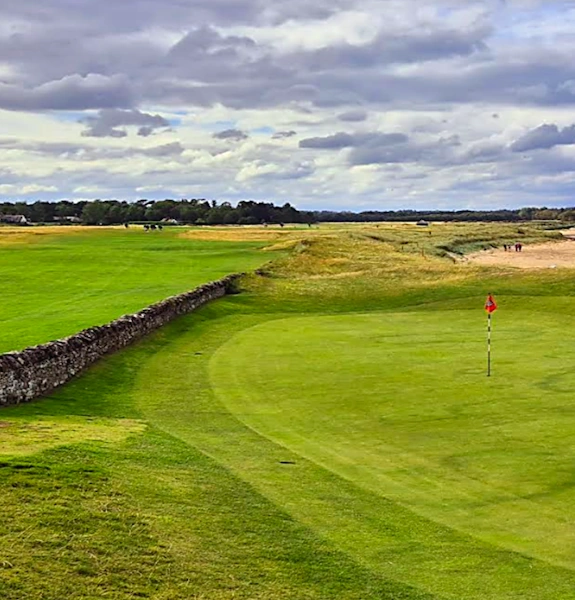
Scotland's Best 'Fantasy' Course
Having tipped our hand a little bit, we thought we’d offer you our thoughts on what would be Scotland’s best golf course if we were able to borrow holes from anywhere, and put them together
To view our choices, CLICK, the button below
To view our nominations for some of the best hidden gems, arrow right or swipe left >>>>>>>>
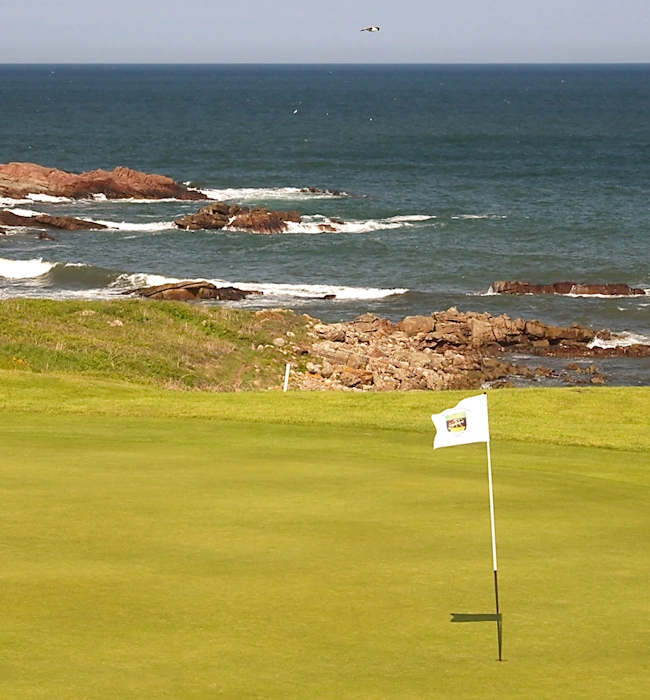
Some Hidden Gems & Shrewdies
In truth, the idea that any ‘gem’ could still be hidden in today’s age of the internet is perhaps a bit of a misnomer, but there might be a few places which are still flying a little bit under the radar. On balance though, they tend to ‘hide in plain sight’, usually because they’re surrounded by higher profile rock stars
To have a look at some of our nominations, CLICK, the button below
St Andrews Old Course
The St Andrews Old Course is a bit of an anachronism, but it also possesses a uniquely magical quality immersed in its heritage and place in the game’s history.
No one knows for certain when it was built, or by whom. It was conceived before earth moving machinery made artificial innovation possible. The course is of a time where golfers looked into the landscape and interpreted hazards and designed holes around what nature had bequeathed them. Calls to try and modernise it have always been tightly controlled. It’ll likely be your round here that will end up consuming the memory as you convince yourself that you could (and should) have gone six shots better. Then it’s ‘got you’
For a closer look at the St Andrews Old Course, CLICK, the button below
Carnoustie
Dubbed ‘Car-Nasty’, Carnoustie is considered by many to be the most difficult links in the Open Championship rotation
In recent years it has seen some dramatic finishes, none more so than in 1999 when Jean van de Velde took an eight at the 72nd hole to throw away the claret jug. Iconic images of him paddling in the notorious ‘Barry Burn’ have entered golfing legend. The final four holes are the hardest finish on the rotation. After the carnage of 1999 (6 over won) Sport Illustrated described it as
“a nasty antique that was brought down from the attic after 24 years …the rough was deeper; and the R&A made the fairways as narrow as an eel’s appendix scar”.
Whereas the eighteenth is the hole that has often generated the most drama. The par 3 sixteenth has the highest average scoring par 3 on the Open Championship rotation as indeed the closing four are the hardest. The Par 5, sixth ‘Hogan’s Alley’, is another famous hole with a punitive out of bounds fence running down it’s left
1999 Carnoustie reduced Sergio Garcia to tears after successive scores of 89 and 83
For a closer look at Carnoustie, CLICK, the button below
Kingsbarns
There are records of golf being played at Kingsbarns from 1793, but the modern course opened in 2000, and is set on three-tiered levels, sloping towards the coast. Nearly every hole has stunning views of the North Sea.
Kingsbarns quickly racked up rave reviews and earned a world ranking of about #50, a position which it’s held more or less since.
The par 5, twelfth hole that plays along the arching shoreline to an exposed green, and the par 3, fifteenth, which involves playing a tee-shot across the waves, are often considered to the courses signature assignments. It was the fourth and fifth that caught Tom Doak’s eye when he described as Kingsbarns
“as piece of construction work, Kingsbarns is one of the best projects I’ve ever seen. I wouldn’t have believed it, if I hadn’t seen it for myself”
Perhaps of greatest significance is the number of times it beats more illustrious neighbours in surveys amongst visiting Americans since its always immaculately presented.
Kingsbarns completes the trio of East Coast giants that host the European Tour’s Dunhill links challenge each year alongside Carnoustie and the Old Course.
For a closer look at Kingsbarns, CLICK, the button below
Dumbarnie
Dumbarnie opened in 2020, and looks to have replicated the Kingsbarns design with 14 of the 18 holes having unencumbered views of the sea due to it playing on a natural escarpment with 80ft of elevation on the site. A number of high tees are used to provide the drama of hitting drives out to the ocean. Unusually for a links, water has also been introduced, albeit mainly confined to burns rather than lakes. The fairways are wide and forgiving with driveable risk and reward par 4’s a particular feature of the lay-out. The fifteenth looks remarkably similar to the 7th at Valhalla.
The philosophy behind it is aimed challenging the thinking golfer rather than humiliating them through penalty; as course designer Clive Clark remarked
“I have yet to hear a golfer come in from his round and declare: I really enjoyed a great round of golf today – I only lost 6 balls and 3-putted five greens!”
In 2021 Dumbarnie was named the world’s best new golf course at the international world golf awards which you have to imagine will go some way towards securing its top-100 position as it begins to bed down and evolve.
Turnberry
The iconic Stevenson lighthouse sitting on its craggy headland in amongst the ruins of Turnberry castle, and with views of Ailsa Craig and the Isle of Arran out to sea, plus a tendency to put on spectacular sunsets, Turnberry is the most aesthetic of all the Open venues. In modern golfing legend Turnberry is forever etched in the pages of history as the location for the ‘duel in the sun’ from 1977 when Tom Watson narrowly prevailed over Jack Nicklaus with the rest nowhere. Myths are made in moments, but legends last a lifetime.
In 2016 the course finished it’s stunning redevelopment. The new holes 9-11, look set to become the signature stretch. Not so much Amen Corner, as perhaps a Rocky Horror! The fifth is the hardest on the course and has been toughened up further. The fourteenth, an infinity hole out to sea might become the most awe inspiring.
Is Turnberry the best course in Scotland? We don’t know, it’s a hotly contested accolade, but it’s certainly in any conversation
For a closer look at Turnberry, CLICK, the button below
Royal Troon
Troon is a traditional links and has hosted the Open a total of ten times. Make your score going out. The inward nine against the omni-present wind is always a trial, made harder by hideously deep rough interspersed with thick gorse and broom.
The par 3, eighth, described by Willie Park as “a pitching surface skimmed down to the size of a Postage Stamp” is the signature hole. The name stuck, and today it’s one the most recognisable short holes in the global game
It’s the par 4, eleventh, ‘the Railway Hole’, that’s the most feared though. In 1997 Tiger Woods carded an eight here. Jack Nicklaus was even more chewed up. He returned a ten in 1962. You have to wonder if there is a hole anywhere in world golf where Jack and Tiger have each signed for quadruples?
More recently Troon staged the memorable 2016 Championship. Henrik Stenson edged Phil Mickelson in one of the most stunning displays of head-to-head play in Major Championship history. They pulled a remarkable 11 shots clear, both shooting record equalling 63’s en-route.
For a closer look at Royal Troon, CLICK, the button below
Muirfield
Frequently ranked inside the world’s top 10, Muirfield is the ‘blue-blooded’ aristocrat of Scottish golf and always immaculately presented. It doesn’t really have any weak holes. So impressed was Jack, he went back to Ohio and built Muirfield Village in homage to the original.
Muirfield instigated a then revolutionary design of two loops of nine. This was to prevent players dialling into the wind of the traditional out and back nine and adjusting. This design ensures that the wind is constantly changing direction so as to test all aspects of your game and reading of a ball in flight. All three paradigms of golf design penal, heroic and strategic.
The prestigious roll call of Muirfield Open championship winners is perhaps its best testimonial. Player, Nicklaus, Trevino, Watson, Faldo, Els & most recently of course, Mickelson. It offers golfers choices and then requires you to execute. It is a golfers, golf course.
Muirfield is notoriously exclusive however, access is limited. Booking early isn’t just advised, it’s pretty well essential.
For a closer look at Muirfield, CLICK, the button below
North Berwick
The links of North Berwick are a traditional out and back nine. Undulating fairways, blind shots, tricky burns and even stone walls make their presence felt in the landscape. The course really is a throw back to the experiences of the game’s pioneers who had to interpret the landscape and weave the hazards nature handed them into their own personal tapestries. North Berwick has an endearing old-fashioned feel.
North Berwick also possesses the original ‘Redan’ hole, (15). Found the world over, ‘Redans’ are the most copied hole in golf.
The Redan completes a trio of holes from 13 which is rarely surpassed in Scottish golf, perhaps only Turnberry’s 9 to 11, and Carnoustie’s 16-18 has better claims for being the best consecutive 3 in a row.
North Berwick is one of those rare courses you never hear a bad word said about, and we’re always struck by the fact that it seems to be the most knowledgeable and the best judges who enthuse most about it.
It would be wrong to think that it’s a curiosity relic though. It’s a beguiling world top-50 ranked course on merit.
Royal Dornoch
Golf Digest has rated Royal Dornoch the highest of Scotland’s many worthy candidates, and it remains one of elite quartet that vies for the title of best courses.
The Championship course represented a paradigm in design that endures today. The ‘bump-and-run‘ was the traditional shot to mitigate a links wind. Elevated plinth greens were introduced and ringed with fiendish pot-bunkers to guard them from any such commando approach. Without completely taking the traditional ‘stock shot’ out of the equation, a degree of risk was added. Dornoch therefore challenges you to go the aerial route, and ride the wind. Iron play is the key to the course. The rationale is simple: hit a good approach shot and you should be rewarded. Hit a bad one, and you pay the penalty.
Tom Watson said of Dornoch “the most fun I’ve ever had on a golf course”.
The bunkerless 14th, ‘Foxy’ is often regarded as the signature hole and one of the toughest par 4’s in Scotland
For a closer look at Royal Dornoch, CLICK, the button below
Castle Stuart
Castle Stuart is another modern addition to the golfing landscape having opened in July 2009.
The course is set on two-tiered balconies overlooking the dark and foreboding waters of the Moray Firth. Players enjoy stunning panoramas from the highest elevations. The course is rich in the textured signature landscape of Scottish ‘whins’, gorse and broom, heather, and marram from beginning to end. These change colour with the seasons as nature commanded, and weave a tapestry of highland hues into this landscape mosaic of rugged beauty.
The course has quickly established a bit tour pedigree when it hosted the prestigious Scottish Open, where Luke Donald and Alex Noren have triumphed. It was used successfully by Phil Mickelson in 2013 as a springboard to Open success a month later at Muirfield
For a closer look at Castle Stuart, CLICK, the button below
Combinations of these feature in the following itineraries
Testimonial
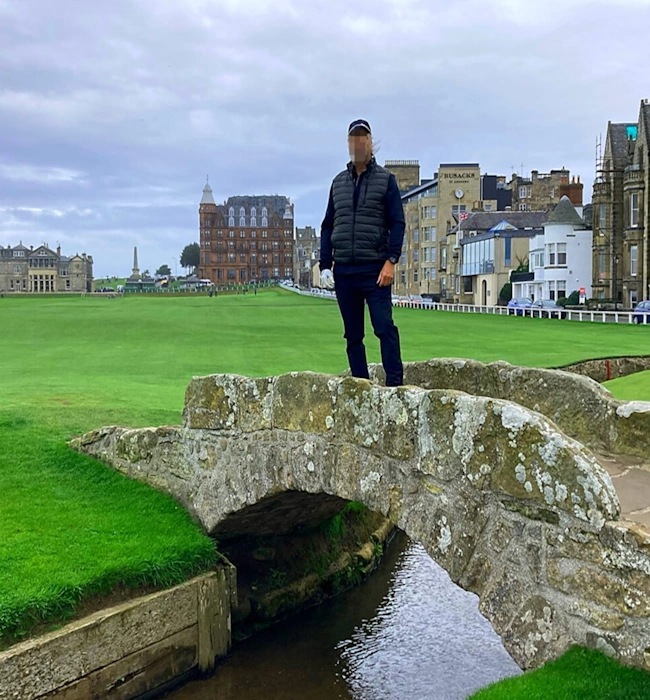
From BB Canada
“I told Alun the courses I was interested in playing and he prepared a stay and play package with 14 days of outstanding golf, but also tremendous site seeing opportunities for my wife.”

From JC Illinois
“His attention to detail is amazing--I think our travel plan booklet ran to forty-eight pages, with gorgeous descriptions of cities and sights, plus maps showing where to go to catch trains, or walk from trains to hotels, sights and golf courses, etc.”

From DF Alabama
“I will cherish the memories for a long time- especially the wonderful times spent on and off the golf course with two of my brothers and brother-in-law. None of the memories and golf would have been possible or enjoyed without your tremendous planning and logistical support.”

AS from Colorado
“Alun and Faraway Fairways created possibly the most memorable golf trip we have ever experienced. EPIC is the only word that comes to mind.”

AC, From Florida/ New York, 2025
“We were hopeful to secure a 4 ball at St. Andrews while avoiding the massive expense other operators had quoted. He was very clear about the plan for achieving a tee time at the Old Course through the ballot, including detailed instruction on how it could be done, and what our odds were. He suggested mid- to late April as the best chance of success and advised that this is also the least rainy part of the year. We took his advice and trusted the process. Well, he was right on all counts!”
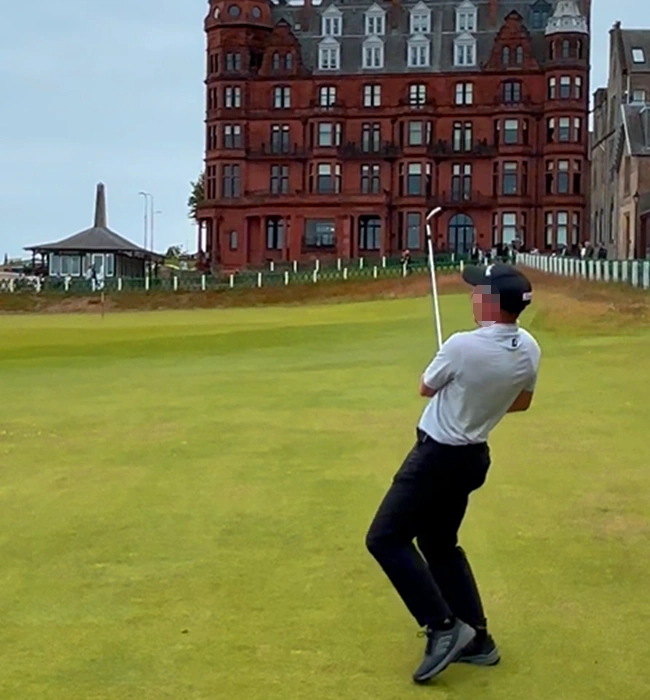
From SB, Minnesota
“We wholeheartedly recommend Alun and Faraway Fairways if you’re looking for a golf trip that is effortless, enjoyable, and truly unforgettable—even for a non-golfer in the mix! My husband and I will be daydreaming about this trip for years to come. 5.5 stars!”

From JB, California
“The best part was that the service was surprisingly affordable. They were thousands of dollars below other quotes that I received, in fact the prices were very similar to what I would have paid if I would have booked everything on my own.”
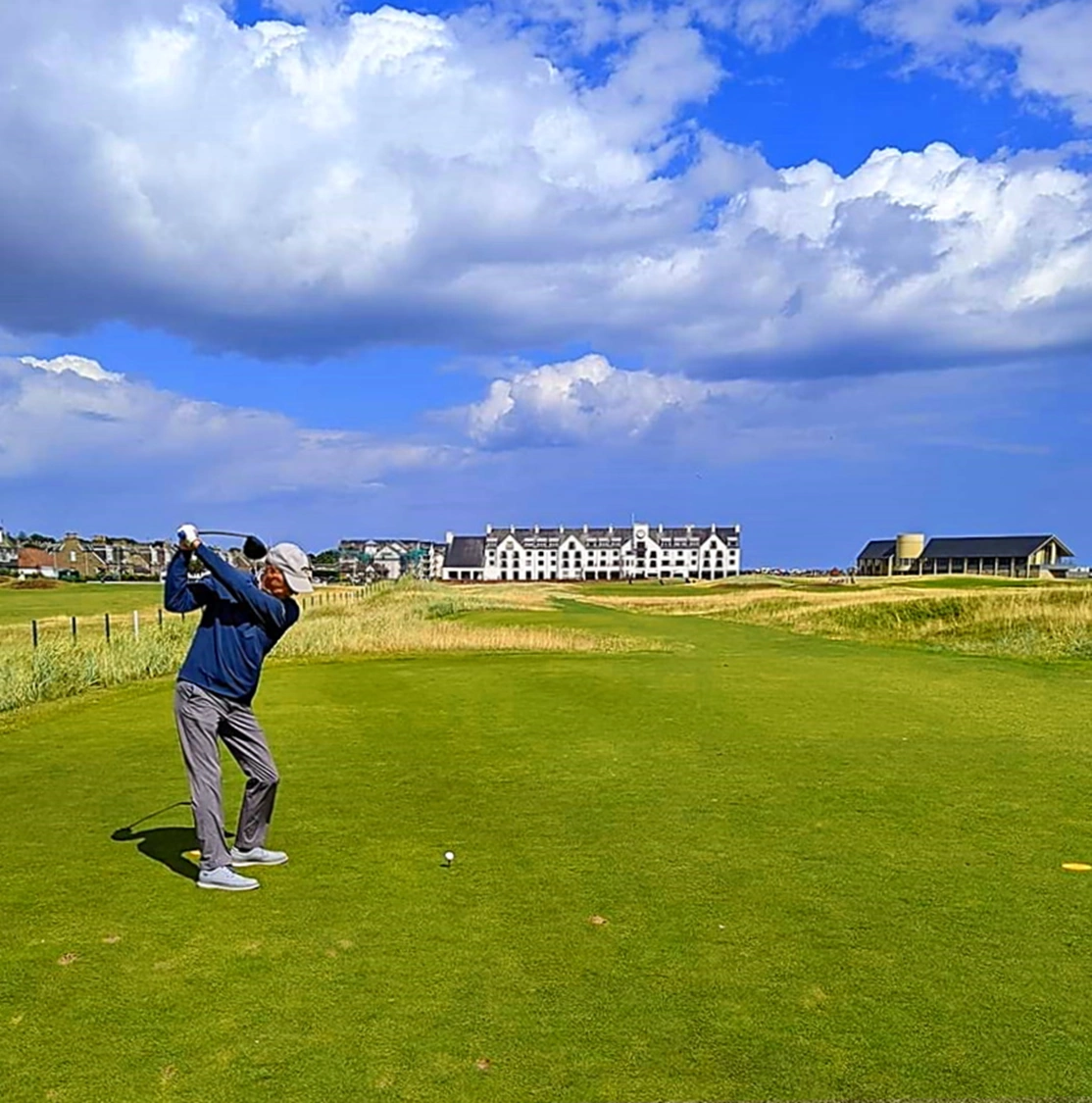
From JCA, Maryland
“I would and will highly recommend your company to anyone looking to plan an unforgettable golf trip. Thank You for putting together a fantastic trip for J.C. and me”
From WF Connecticut
“I think all eight of us would agree that Alun at Faraway Fairways did an absolutely wonderful job of putting this “golf vacation of a lifetime” together for us. His focus on the details was extraordinary from the choice of courses and the timing of the tee times, the amazingly beautiful accommodations along with some excellent meal selections, and the transportation options he provided to get us from place to place.”
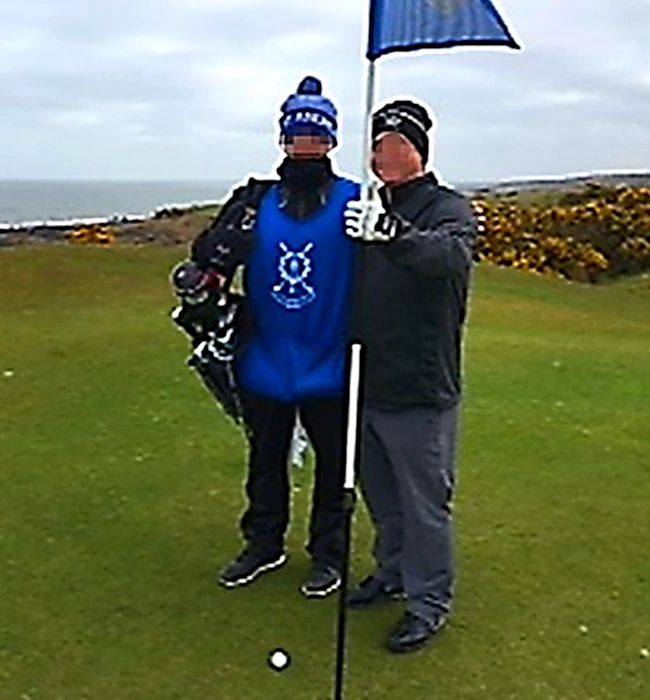
From DR South Carolina
“You are about to tee it up in your Major. Seek wisdom, integrity and professionalism. Alun Davies and Faraway Fairways will not disappoint you. They cannot assure a calm sunny day with temperatures in the 70’s on the Old Course.”

From MM, California
“One fantastic trip you organized, and more importantly took ownership of in terms of daily communication and stewardship during our 2+ weeks in Scotland and Ireland. The logistics were spotless…100% of the transports were on time and excellent, the lodging choices spectacular and the golf was off the charts in terms of quality and arrangements made”
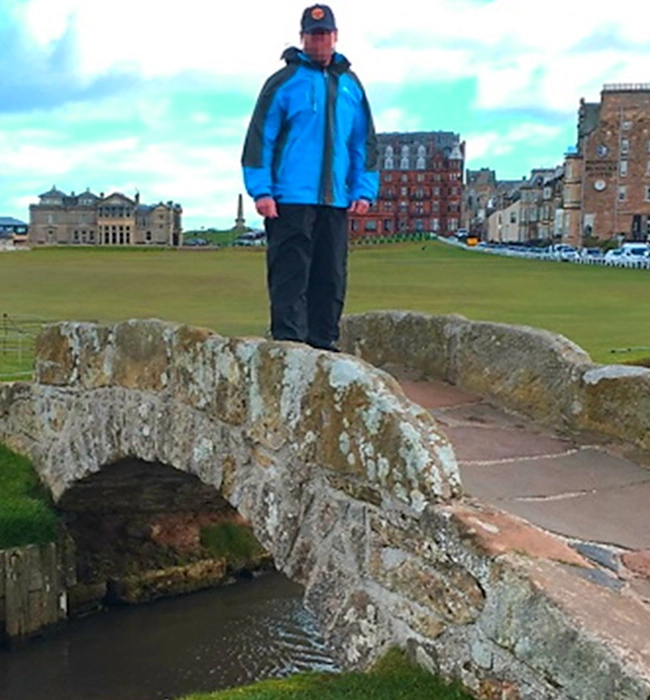
DH from California
“You cannot go wrong with the support Faraway Fairways offered. I did this trip solo and all last minute but I have already begun to plan the next trip which will include my best golfing buddies.”
Enquiry
We don't need to make this an ordeal by 101 filtering questions! In reality there are probably little more than half a dozen things we need to know to build out a proposal. The guidance below might help you frame answers
Duration - usually best expressed as a range up to a maximum
Time of year - can be anything from a specific date range to a named season
Travel class - Faraway Fairways uses 'Luxury', 'Premier' or 'Affordable' for generic purposes. You might choose to reference the international 'star' rating system. We're only looking for something to help steer us into the right sector
Self drive or hired driver - In broad terms, self driving is normally less expensive, and much more flexible, but some folk just don't want to do it
Must play courses/ must do places - a few name checks is all that's needed