
Playing Castle Stuart on a Scottish golf Trip- content duplicated in pages, potential to delete this
Golf across the pages of Scotland's history book - World Ranked top-100
Take the High Road
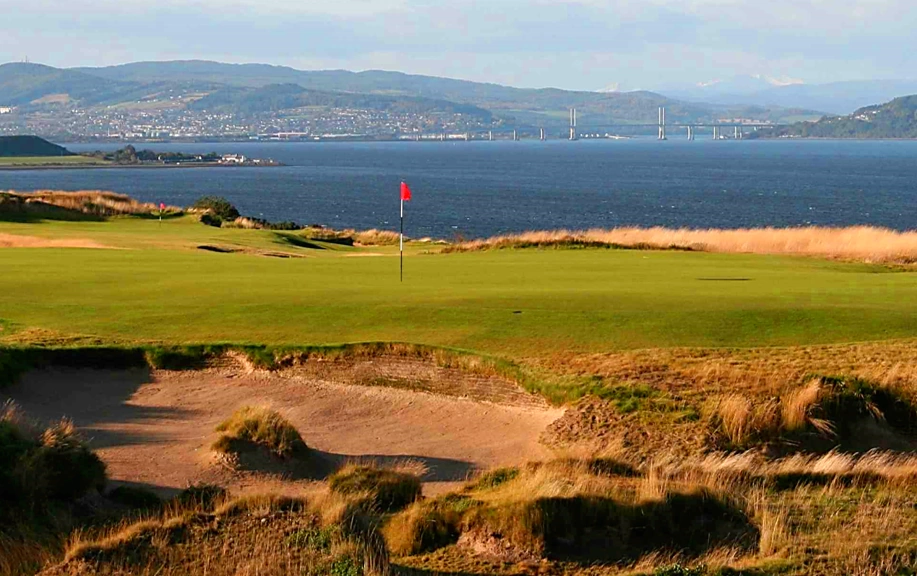
A close design relative of Kingsbarns, Castle Stuart was built a few years later by the same team. Like Kingsbarns, it quickly established a world-top-100 ranking and earned a place on the European Tour hosting Scottish Opens
Castle Stuart sits on the shores of the Moray Firth, just a mere 6 mins drive from the evocative battlefield of Culloden.
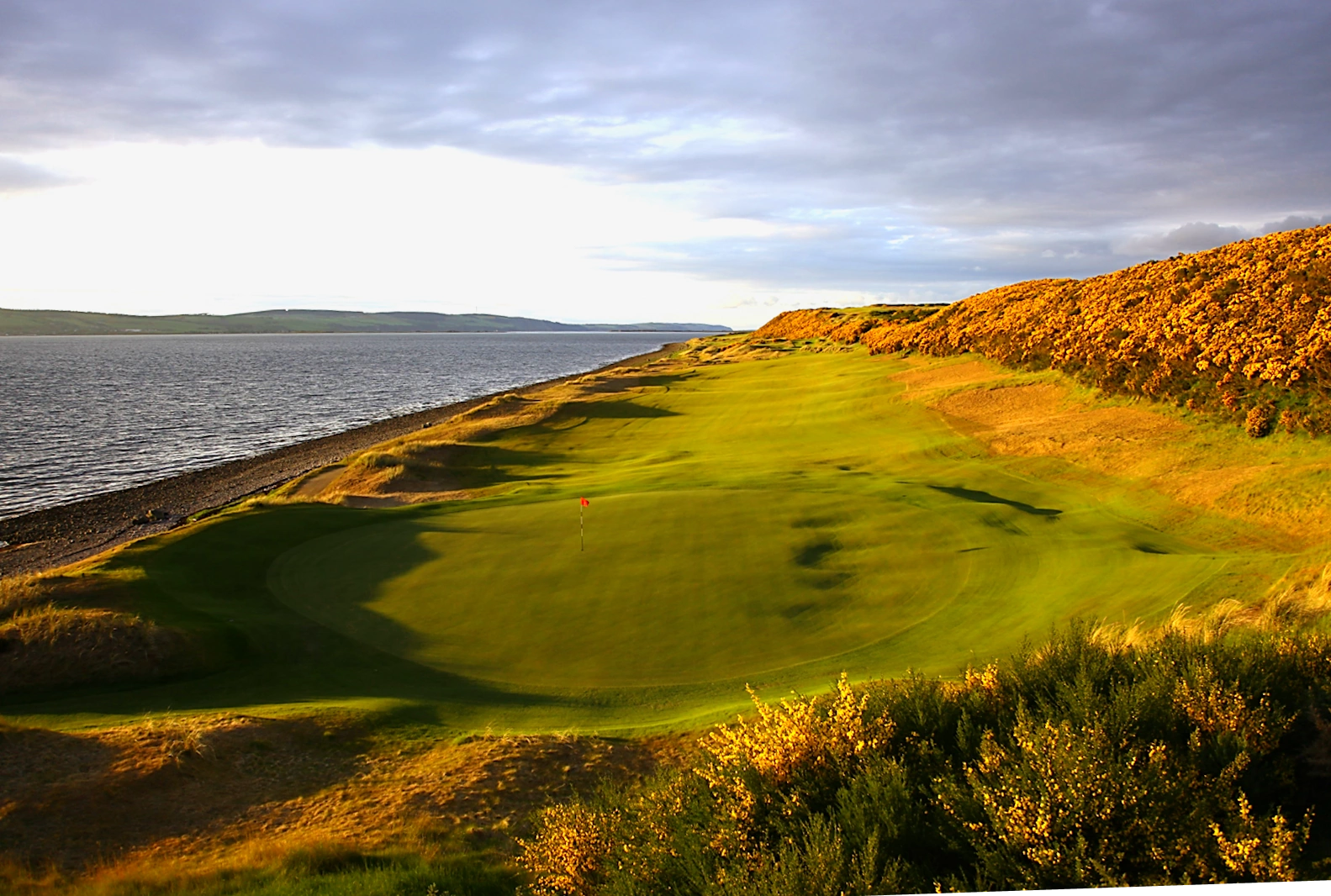
It plays on a headland with upper and lower tiers, and consequently has high elevation tee-shots to targets below as you transfer between the two. The design philosophy stressed enhancing the natural landscape rather than manufacturing an artificial one, so copious ‘waste’ bunkers abound along with infinity greens that run into the water.
Castle Stuart needn’t be a punitive lay-out. Golfers have deliberately been given a chance to recover an error rather than clobbered for it, but you might need to improvise a bit
Castle Stuart appears in the following itineraries >>>>>>
How to include Castle Stuart
Castle Stuart benefits for its proximity to Royal Dornoch. The two courses can often be played in combination, which alongside Old Petty and Nairn is strong enough to build a distinct regional offer. In addition to this, the highlands boasts Loch Ness, Culloden, and Urquhart and/ or Dunrobin Castles, so also has enough to sate the appetite of any non-golfers, which makes the region one of the better options if you need to consider their requirements as well
If we come into London, then we can take a direct flight to Inverness. Surprisingly perhaps, there is also a direct route to Inverness from Belfast, which means that despite its geographic separation, Castle Stuart can link well with Northern Ireland
Most visiting golfers will come to Castle Stuart the traditional way though, taking a drive ‘up the A9’ (Scotland’s longest road), be it typically from Gleneagles or Carnoustie
We can include Castle Stuart as follows
With the Highlands & Aberdeenshire package
Part of the Golf & Whisky package
Part of the ‘Best Tour’ in Scotland & Ireland
A guide to the holes of interest
This is a drivable par 4 under most conditions, and sometimes makes these composite best 18 holes courses. The green is long and narrow (some 14 paces wide) and slightly sloping rightward toward the sea. Recoveries from left of the green are quite testy although one can putt, chip, or wedge it from the unevenly ‘rumpled’ and tightly mown fairway cut. But whatever the decision on the tee, try and take the bunkers out of play with the first shot and remember how testing the lie, stance, and angle can be from left of the green
The fourth has something of an air of a hole built around a vista about it as you line up a par 3 played directly at the castle itself. There are three ways to get your ball onto this mid-length par 3 green:
1) a shot meant to land short on the high left fairway plateau can release the ball down and to the right onto the front left
2) a shot with enough spin can land and ‘grow teeth’ as it sits down on
3) a releasing shot can find the 30 yard long and virtually invisible fairway plateau fronting the green.
Let the wind conditions, pin placement, and preferred shot shape govern your thought process
Downwind this par 4 is close to being drivable for many players, but the line needs to on the fairway right of the green, where the contours plus a little right-to-left ball might bring you onto the back portion of the green. Less than solid strikes that leave the ball in the fairway hollow short and right of the green result in awkward and blind low-to-high shots to a less-than-receptive green. Tee balls struck solidly directly at the green bring the largely hidden and intruding finger of the left-side ‘open sandy area’ into play.
The 10th is chosen not so much for the challenge, but rather for the drama, as it marks a point where we transition from the upper tier to the lower tier and begin to play along the shoreline.
The tee-sheet is played from an elevated position into a yawning fairway below. It pretty much tempts you to hit one out to sea as you drive towards the Moray Firth and watch the ball sail away on the wind. In truth, it’s difficult to make a complete mess of the drive as gravity is always on our side, but staying to the left is the advised line for a more controllable approach.
A couple of cunning bunkers are positioned to catch us out. The secret to the hole however is the approach
It’s worth name-checking the previous hole (10th) which involved launching an inspiring drive from an elevated tee down on to the bottom tier, for the 11th marks the beginning of a run of shoreline line holes on the lower tier
Long and left is not good. Nor is long and right. So for those low handicappers playing mid-to-back pin locations, don’t go ‘over the top’ or ‘push’ your shot. The result can be rather wet. For those of more modest ambition, short and right is a very manageable recovery area. Putting up and through the greenside contours will yield many a par save. Maybe this ‘shorty’ is a wee bit harder, relatively speaking, for more easily seduced better players than for the rest. Enjoy the view of Chanonry Lighthouse and the firth beyond the green on this hole that exudes intimacy with the sea.
The closing trio of holes at Castle Stuart are compassionate beginning with this drivable par 4. If you’re behind coming to the 16th tee you can still turn things round. Having a go for it on 16 isn’t a bad idea. Something disastrous can happen but it’s not likely. A weak drive to the left off the tee leaves a difficult angle across a deep fairway hollow fronting the green. Long and right might find either a bunker or some heather from which recoveries can be made. Through the green and beyond are hidden ‘saving’ bunkers. Weak and right can leave a very manageable set of options for getting close – wedge it, chip it, and yes even putt it; Take note of the green’s infinity edge with nothing beyond but the sea and Fort George
Testimonial
From BB Canada
“I told Alun the courses I was interested in playing and he prepared a stay and play package with 14 days of outstanding golf, but also tremendous site seeing opportunities for my wife.”

From JC Illinois
“His attention to detail is amazing--I think our travel plan booklet ran to forty-eight pages, with gorgeous descriptions of cities and sights, plus maps showing where to go to catch trains, or walk from trains to hotels, sights and golf courses, etc.”

From DF Alabama
“I will cherish the memories for a long time- especially the wonderful times spent on and off the golf course with two of my brothers and brother-in-law. None of the memories and golf would have been possible or enjoyed without your tremendous planning and logistical support.”

AS from Colorado
“Alun and Faraway Fairways created possibly the most memorable golf trip we have ever experienced. EPIC is the only word that comes to mind.”

AC, From Florida/ New York, 2025
“We were hopeful to secure a 4 ball at St. Andrews while avoiding the massive expense other operators had quoted. He was very clear about the plan for achieving a tee time at the Old Course through the ballot, including detailed instruction on how it could be done, and what our odds were. He suggested mid- to late April as the best chance of success and advised that this is also the least rainy part of the year. We took his advice and trusted the process. Well, he was right on all counts!”
From SB, Minnesota
“We wholeheartedly recommend Alun and Faraway Fairways if you’re looking for a golf trip that is effortless, enjoyable, and truly unforgettable—even for a non-golfer in the mix! My husband and I will be daydreaming about this trip for years to come. 5.5 stars!”

From JB, California
“The best part was that the service was surprisingly affordable. They were thousands of dollars below other quotes that I received, in fact the prices were very similar to what I would have paid if I would have booked everything on my own.”
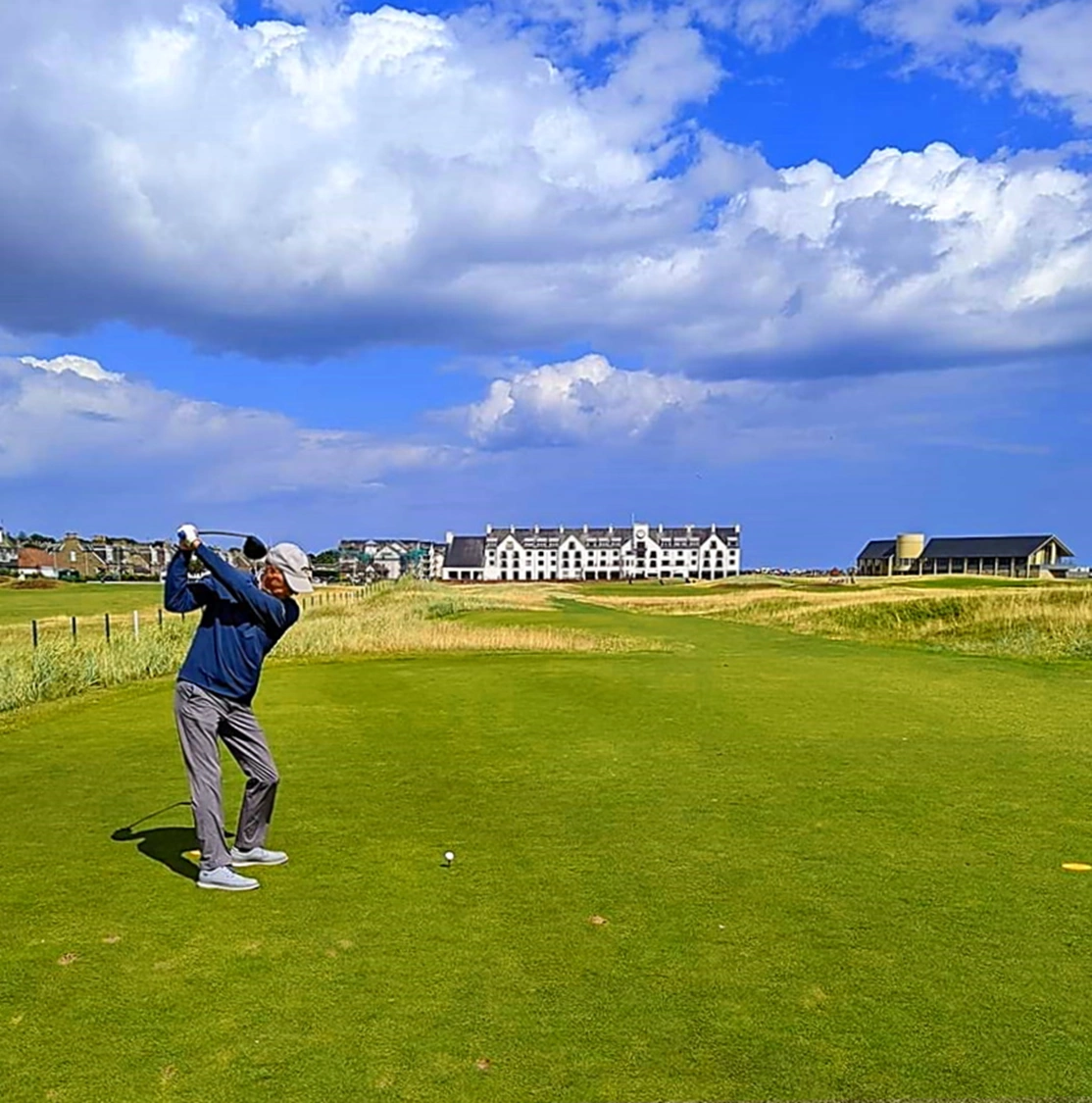
From JCA, Maryland
“I would and will highly recommend your company to anyone looking to plan an unforgettable golf trip. Thank You for putting together a fantastic trip for J.C. and me”
From WF Connecticut
“I think all eight of us would agree that Alun at Faraway Fairways did an absolutely wonderful job of putting this “golf vacation of a lifetime” together for us. His focus on the details was extraordinary from the choice of courses and the timing of the tee times, the amazingly beautiful accommodations along with some excellent meal selections, and the transportation options he provided to get us from place to place.”
From DR South Carolina
“You are about to tee it up in your Major. Seek wisdom, integrity and professionalism. Alun Davies and Faraway Fairways will not disappoint you. They cannot assure a calm sunny day with temperatures in the 70’s on the Old Course.”

From MM, California
“One fantastic trip you organized, and more importantly took ownership of in terms of daily communication and stewardship during our 2+ weeks in Scotland and Ireland. The logistics were spotless…100% of the transports were on time and excellent, the lodging choices spectacular and the golf was off the charts in terms of quality and arrangements made”
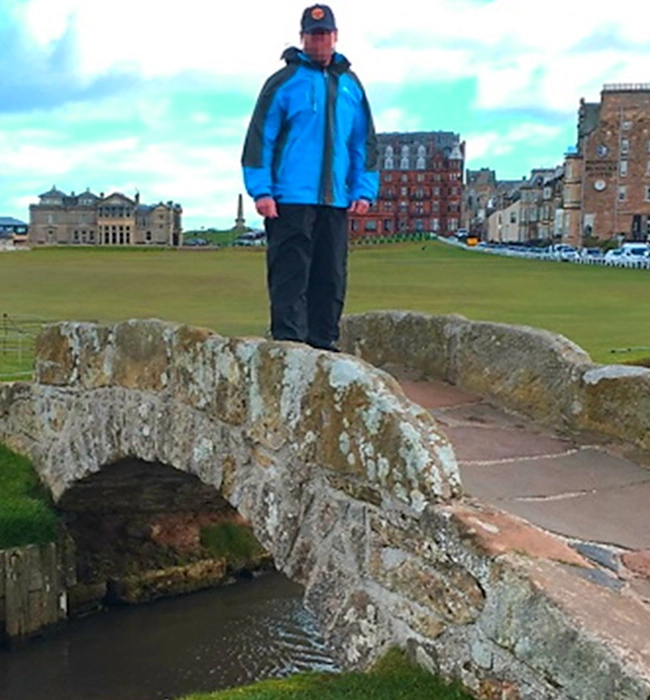
DH from California
“You cannot go wrong with the support Faraway Fairways offered. I did this trip solo and all last minute but I have already begun to plan the next trip which will include my best golfing buddies.”